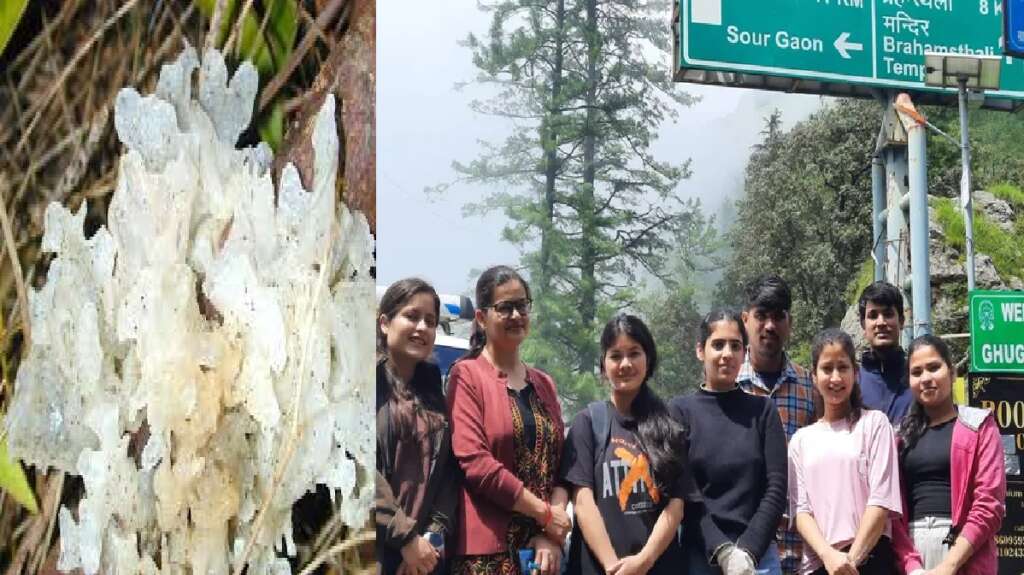
Rare fungus, Himalayan biodiversity, Nainital discovery: Deep within the forests near Nainital, a rare scientific discovery has placed Uttarakhand on the international research map. Researchers from Kumaun University have identified an extremely rare jelly fungus species named Guupinopsis alpina, also known as Alpine Jellycone, which has been recorded in India for the very first time. The discovery has generated excitement among scientists studying Himalayan biodiversity and climate linked ecological changes.
Found During an Educational Field Visit
The rare fungus was discovered in the Pangot region near Nainital, growing on decaying wood in a forest area. The finding was made during an educational field tour conducted in August 2024 by students of the Botany Department at Kumaun University under the guidance of Dr Prabha Pant. What initially appeared to be an unusual forest organism later turned out to be a scientifically significant discovery.
First Ever Record of the Species in India
According to researchers, this fungus species had previously been reported only in regions of Iran and parts of North America. After detailed examination led by researcher Kapil Khulbe and confirmation by retired FRI professor Dr. N. K. Harsh, it was established that this is the first recorded presence of Guupinopsis alpina in India.
Experts believe the discovery is highly important for understanding Himalayan ecology and biodiversity. The fungus may help researchers study environmental shifts, climate patterns, and fungal adaptation in high altitude ecosystems. Scientists also suspect that migratory birds may have carried the spores across continents into the Himalayan region.
A Fungus with Unusual Features
The fungus is known for its striking golden yellow colour and soft rubber like texture. One of its most unique characteristics is that it expands again when exposed to moisture after drying out. Researchers say it is among the earliest fungi to emerge after snow melts in colder regions, making it ecologically important in alpine environments.
The significance of the discovery increased further after its photograph was featured on the cover page of the reputed scientific journal Current Science. This recognition has brought global attention to the Himalayan region and the ongoing scientific work being conducted by researchers in Uttarakhand.
Himalayas Emerging as a Biodiversity Hotspot
Over recent years, several rare fungi and mushroom species have been discovered in Himalayan regions, highlighting how much of the ecosystem still remains unexplored. Scientists believe these findings can contribute significantly to global understanding of mountain ecology and conservation.
What began as a routine academic field visit has now turned into a discovery of international significance. The rare fungus found in Nainital is not just a scientific record but a reminder of the hidden natural wealth of the Himalayas. As researchers continue to study such unique organisms, Uttarakhand is steadily emerging as an important center for biodiversity research.